AI transforms fashion and is transforming all kinds of things, from forecasting trends to virtual shopping experiences to personalized shopping and more efficient supply chains. Find out how fashion companies can utilize AI to boost innovation and create exceptional product experiences.
In the context of thinking about fashion, Artificial Intelligence (AI) likely isn’t the first thought that comes to mind. There is nothing about AI systems that replicate human activities that makes you think of racks of clothing. Fashion is about fabrics along with runway fashions, but AI is more about numbers and models of data. At first sight, the two appear to be a rather odd couple.
However, since the early decade of 2000s, AI has slowly entered the fashion industry, beginning with data analytics tools and optimization of inventory. Since then, AI’s presence has grown more visible and has led to innovations like virtual shopping trials and personalized experiences.
What started in the back of the room is changing the way we do business. Let’s glance at the ways AI has been changing fashion one step at a time!
How AI is Transforming the Fashion Industry
In the same way that AI continues to develop its role in fashion, it is becoming more difficult to ignore. With its increasing acceptance across the fashion industry, AI is actively shaping how fashion is made and experienced
AI in Fashion Design
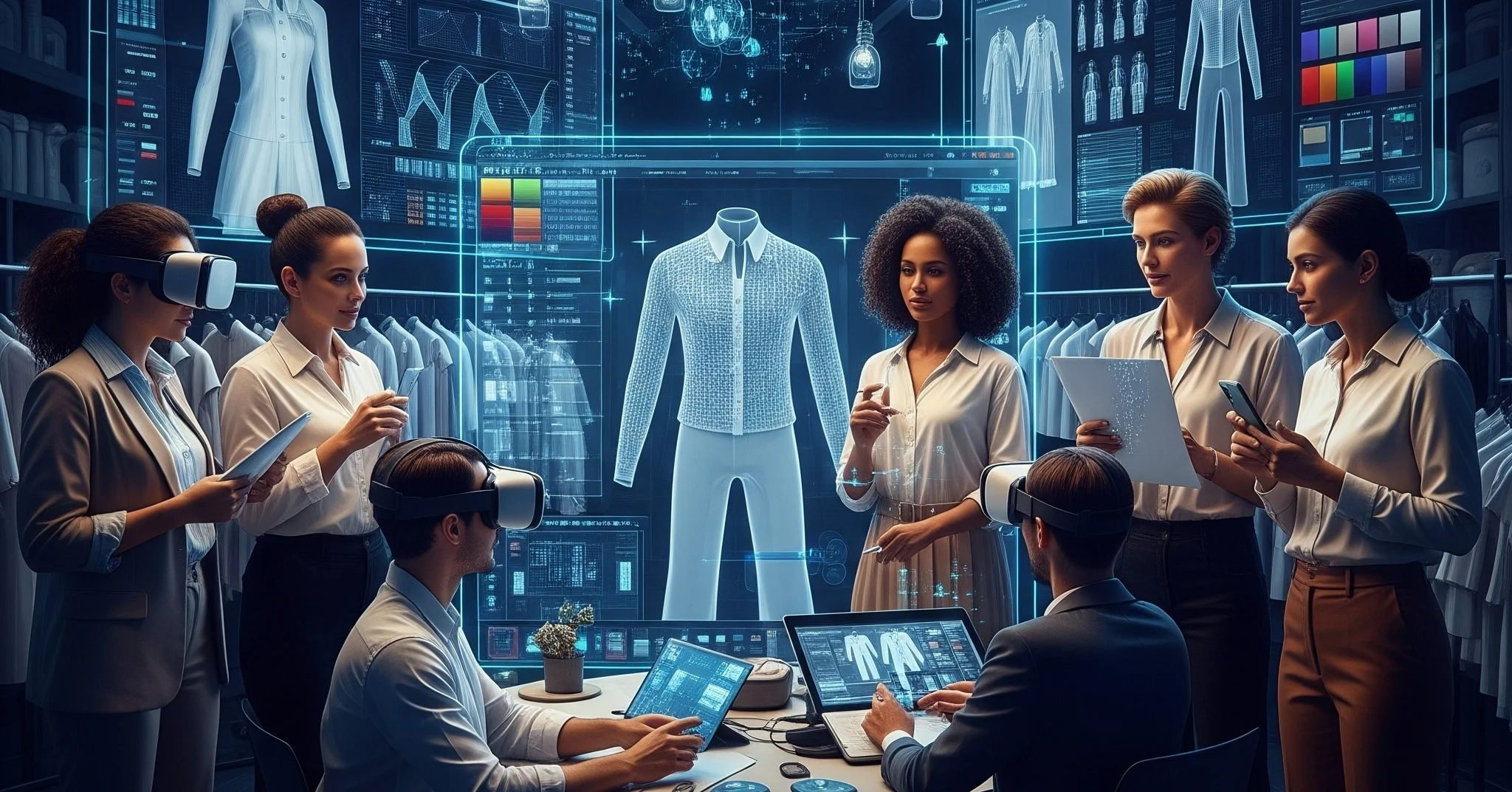
The trends of the fashion industry appear to be changing every week, and generative AI allows designers to think of new ideas faster. Tools such as Fashable or Raspberry can transform mood boards or sketches into a myriad of designs in a matter of minutes, helping speed up the process of designing and sparking new ideas. For fashion companies, that means fewer physical prototypes and a better chance to keep up with the ever-changing fashion trends!
But it’s not the only factor AI can bring into the mix. With the aid in the form of AI algorithmic and machine-learning, companies can look at trends, sales history, and consumer behavior to help make smarter design choices that can result in collections that are more in line with what customers really desire, improve customer satisfaction of customers and reduce waste from the supply chain. In-store or shopping online, AI is making the shopping experience more personalized and responsive than ever before.
Moncler leads as an excellent example, since they utilized artificial intelligence to design the Verone AI Jacket. Verone AI Jacket. AI tools assisted in creating designs and quilted textures for gear that can withstand extreme weather, and laid the foundation for the branding and design of the line. It found the right balance between innovation and precision.
AI in Visual Content Creation
In a visually-driven world of fashion content is the most important thing. AI is changing the way content is produced. From automated editing of images to the generation of virtual models, AI-driven tools help fashion brands create stunning images more quickly and efficiently. Examples include platforms such as FASHN provide rapid content creation for fashion using virtual try-on technologies, which allow retailers and designers to showcase clothing on various models without traditional photoshoots.
These AI tools are efficient and also improve shopping experiences, particularly online. With the ability to create polished content on the scale of their business, brands can improve the quality of their visuals and increase customer satisfaction from customers. With AI algorithms enabling automatic editing as well as virtual trials, fashion brands can provide visually stunning content while optimizing the resources they use across their pipelines of content.
AI in Consumer Experience
The most immediately evident impact that AI can have on the customer experience is the ability to customize both the in-store experience in stores and the online experience. From intelligent suggestions for size to style matching and useful chatbots able to respond to simple questions, AI can help businesses provide seamless customer experiences, making shopping less difficult and more enjoyable.
AI is also changing the way people discover and interact with products. Intelligent systems are able to examine browsing habits and preferences of the user to suggest products that feel specific to the individual. For instance, Sephora’s Virtual Artist app lets users experience the makeup they want to try; however, its true value is in the personalized product suggestions. Based on how people’s skin looks and their browsing habits, the Sephora AI suggests items (like the perfect shade of foundation or skincare) that customers may not have specifically searched for. It’s like the algorithm is reading their minds before they’ve even decided what they’re looking for!
AI in Marketing, Data & Forecasting
The fashion industry’s marketing has advanced far beyond seasonal campaigns and gut-feel judgements. Nowadays, AI systems and machine learning give brands a data-driven edge. They can help them identify the latest trends in fashion and optimize campaigns across all channels.
By analysing real-time information from the purchase and search behaviour, AI enables more accurate planning and better decision-making. With predictive modeling, companies can predict trends ahead and also determine the optimal timing to introduce new campaigns or products. It reduces production overruns, helps keep the inventory undercontrolrl and ensures that marketing is on the right track when it is needed, giving brands a crucial advantage in a highly competitive market!
AI-Powered Search and the Rise of LLMs
As AI continues to develop and evolve, so too does the way people look for products. Many customers are turning to big modeling of languages (LLMs) such as ChatGPT, Google Gemini, and many more to ask natural language questions. This trend indicates an increasing preference for natural-language, AI-powered search experiences that go far beyond traditional queries based on keywords.
For fashion-conscious brands, this means that the information about their products should not be just accurate. It has to be well-organized, precise, reliable, and easily recognized and interpreted by AI systems. If your information isn’t readable or accessible, i it’saiaisk, you’ll be excluded from the recommendation loop completely. By making sure your information about your product is updated and accessible through the appropriate channels, you are able to position your business to benefit from the growing online traffic and be present in an ever-changing digital environment.
AI-Powered Shopping Assistants
Artificial Intelligence-powered assistants for shopping are changing how shoppers can ask questions and make decisions when they shop online. These assistants, usually comprised of intelligent chatbots or voice-activated tools, assist shoppers through the buying experience by answering questions and suggesting products in real-time.
The reason they are so efficient is their capacity to learn and change. They use data from customers and AI-based conversations to respond naturally, providing specific suggestions that are personalised and mimicking the in-store assistance. Consider Rufus Amazon’s AI shopping assistant, as an instance. It aids shoppers in finding products by responding to natural language questions such as “What do I need for a beginner ski trip?” or “What’s a good gift for a new parent?” Rufus offers contextual answers that make the process of finding products easy and improve the general shopping experience.
AI and Sustainability
AI is a subject of controversy for causing environmental harm with good reason. However, when utilized properly, AI can help to transform the fashion industry into, more efficient and durable one in the long term. With the aid of intelligent forecasting and optimization of the supply chain, AI can help brands to avoid excess stock and cut down on the amount of waste.
Certain companies are employing AI to evaluate the environmental impact of their products or to track the life cycle of a product. Certain AI tools can make sure that each product comes with the correct documentation, such as Digital Product Passports (DPPs), and is in line with the latest industry standards. Through improving the transparency of traceability and accountability, AI empowers fashion brands to make better decisions that are compatible with their core values and expectations of consumers.
Integration of AI with PIM
In the fast-moving world of fashion in which product lines change quickly and trends are constantly changing, maintaining high-quality data on products is a constant struggle. Akeneo AI-powered PIM assists fashion brands in simplifying and increasing the size of their product data by automatically adding attributes such as color and style directly from the product pictures or descriptions. This process helps ensure consistency and enables teams to launch collections more quickly across different channels.
One great illustration of this is Courir. The leading fashion retailer used Akeneo Product Cloud to transition from a manual, fragmented process to a central and AI-driven system. Through consolidating their product data and automating their key workflows, Courir reduced the description of their products as well as translation times from 10 days down to 24 hours. The data entry manual was reduced by 97 percent, allowing teams to concentrate on strategic marketing. The 96% success rate of Courir’s offerings being launched quicker and with greater accuracy. Courir not only improved efficiency in operations but also increased the quality of their product experiences across all channels.
Where Fashion Meets Intelligence
AI isn’t an idea of the future; it’s an actual benefit for fashion companies that are ready to evolve and adapt. From visual and design to personalised shopping, AI is changing the way fashion functions and expands.
As expectations of consumers change and expectations change, adapting AI carefully throughout all aspects of the value chain becomes vital. Companies that are open to this change will be able to adapt to the changing times and even be the ones to lead it.